
How to Host a Virtual Roundtable in 2026: Complete B2B Guide
Explore how modern executive meeting solutions move beyond PowerPoint to create high-trust, invite-only environments that connect C-suite decision-makers.
Best Private Dining Rooms in Mayfair: The Top Private & Luxury Spaces for Executive Dining

Explore how modern executive meeting solutions move beyond PowerPoint to create high-trust, invite-only environments that connect C-suite decision-makers.
Beyond the Boardroom: 5 Modern Executive Meeting Solutions for High-Impact B2B Engagement

Explore how modern executive meeting solutions move beyond PowerPoint to create high-trust, invite-only environments that connect C-suite decision-makers.
What Makes Executive Dinners Different?
Executive dinners are often grouped alongside general networking events, yet the two formats serve fundamentally different purposes.
What Is an Executive Dinner? The Complete 2026 Guide for Senior‑Level Engagement
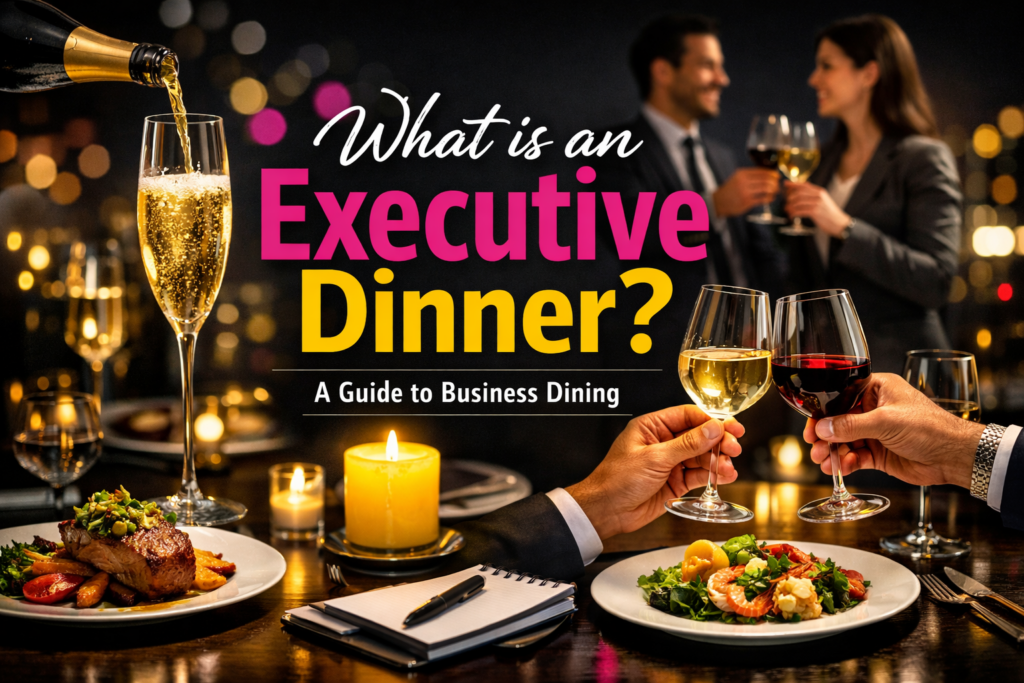
Why Executive Dinners Matter in 2026 Executive dinners have become one of the most effective ways to engage senior decision‑makers in 2026. In a world where attention is fragmented and digital fatigue is high, leaders increasingly value intimate, curated environments where conversations feel natural, relevant, and genuinely useful. An executive dinner is not a networking event, not a sales meeting, and not a presentation. It is a private, invitation‑only gathering designed to bring a select group of senior leaders together for meaningful dialogue, shared insight, and high‑value relationship building. For brands, this format offers something rare: uninterrupted access to decision‑makers in a setting where trust forms quickly and conversations move beyond surface‑level challenges. For attendees, it provides a chance to connect with peers, exchange perspectives, and explore ideas without the pressure of a formal agenda. Executive Dinner Definition What Makes an Executive Dinner Different From a Standard Business Meal An executive dinner is a curated, small‑group dining experience designed to facilitate strategic conversation among senior‑level leaders. Unlike traditional networking events or sales‑driven meetings, the purpose of an executive dinner is not to pitch, present, or persuade. Instead, it creates a space where decision‑makers can explore challenges, share insights, and build meaningful relationships in an environment that feels natural, respectful, and genuinely valuable. These dinners are intentionally intimate. Every element, from the guest list to the seating plan to the flow of conversation, is crafted to encourage openness and depth. When senior leaders step into a room where the noise has been removed and the experience has been thoughtfully designed, the quality of dialogue changes. Conversations become more strategic, more candid, and more aligned with the realities leaders are navigating inside their organisations. For brands, executive dinners offer something rare: uninterrupted access to senior decision‑makers in a setting where trust forms quickly. For attendees, they provide a chance to connect with peers, exchange perspectives, and explore ideas without the pressure of a formal agenda or the distractions of a large‑scale event. While business meals are common, an executive dinner is fundamentally different. It is purpose‑built, not incidental. The guest list is curated, the topic is intentional, and the environment is designed to support meaningful dialogue. Nothing is left to chance. The result is a structured yet relaxed experience where leaders feel comfortable sharing real challenges and exploring new thinking. The Core Purpose of an Executive Dinner Creating Space for High‑Value Strategic Dialogue The primary goal of an executive dinner is to enable high‑value, strategic conversation. Everything about the format, the guest list, the venue, the topic, the seating, the pacing, even the style of hosting, is intentionally designed to create an environment where dialogue feels natural, relevant, and genuinely useful to senior leaders. Unlike traditional events, where noise, volume, and competing priorities dilute the quality of interaction, an executive dinner removes friction. It gives leaders the rare opportunity to slow down, think clearly, and engage in conversations that matter. When the right people are in the room and the experience is curated with intention, the discussion naturally shifts from surface‑level updates to deeper insight sharing, real‑world challenges, and forward‑looking ideas. For brands, the value is equally significant. Executive dinners create a setting where trust forms quickly and authentically, not through presentations or pitches, but through meaningful human connection. They allow organisations to understand what senior leaders are truly prioritising, how they are navigating change, and where future opportunities may emerge. Brands use executive dinners to: Build trust with senior leaders Understand real‑world challenges and priorities Position themselves as credible, thoughtful partners Create opportunities for future commercial conversations Strengthen relationships with existing clients When executed well, an executive dinner becomes more than a meal, it becomes a catalyst for long‑term relationships, strategic alignment, and commercial momentum. Who Attends and Why It Matters The Senior Leaders Who Shape the Conversation Executive dinners typically bring together a carefully selected group of senior leaders whose perspectives genuinely elevate the conversation. The guest list is intentionally small, ensuring every voice at the table contributes meaningfully to the dialogue. Most dinners include: C‑suite leaders Individuals responsible for shaping organisational strategy and long‑term direction. VPs, Directors, and Heads of Function Senior operators who understand the realities of execution and the challenges of transformation. Senior decision‑makers in targeted industries Leaders with shared priorities, similar pressures, and overlapping areas of responsibility. A small number of hosts or subject‑matter experts Present not to dominate the conversation, but to guide it, enrich it, and ensure it remains relevant. The power of the format comes from curation. When the right people are in the room, aligned in seniority, relevance, and experience, the conversation becomes richer, more strategic, and more valuable for everyone involved. Leaders feel comfortable speaking openly, exploring challenges, and sharing perspectives they may not voice in larger or more formal settings. This alignment is what transforms an executive dinner from a simple meal into a high‑value strategic experience. The quality of insight increases, the depth of discussion improves, and the relationships formed carry far greater weight. In short: who attends determines the impact of the entire evening. The most valuable executive dinners begin with intention. Purpose sets the tone, guides the dialogue, and defines the impact. Convene X Team Download Brochure Why Executive Dinners Work for Senior‑Level Engagement The Power of Intimate, High‑Trust Environments Executive dinners outperform other event formats because they align with how senior leaders genuinely prefer to engage: privately, intentionally, and without noise. Senior decision‑makers operate in environments filled with pressure, complexity, and constant demands on their attention. Large events, webinars, and traditional networking sessions often add to that noise rather than reduce it. An executive dinner does the opposite, it creates a calm, focused space where leaders can think clearly, speak openly, and connect meaningfully. The intimacy of the format removes the performative layer that often exists in bigger settings. There is no stage, no audience, and no expectation to deliver polished soundbites. Instead, leaders are invited into a setting where conversation flows naturally and
What Makes Engaging Webinars For Senior Decision-Makers

What Makes Engaging Webinars For Senior Decision-Makers Members of Convene X don’t just belong, they build, create, and elevate together. Request to Join The Strategic Priorities That Shape Executive Engagement What makes an engaging webinars for senior decision-makers?. Senior decision‑makers are some of the hardest audiences to engage. They’re time‑poor, outcome‑driven, and selective about where they invest attention. A webinar aimed at executives can’t rely on generic content, long presentations, or passive delivery. It needs to feel intentional, premium, and worth their time from the first minute. In this guide, we break down what actually makes a webinar engaging for senior leaders, and how organisations can design sessions that drive real participation, insight, and follow‑up action. Start With a Problem Worth Solving Identifying the Strategic Challenges That Matter Most to Executives Executives don’t attend webinars for education alone, they attend to gain clarity on a strategic challenge. The most engaging webinars begin with a sharp, relevant problem statement that speaks directly to their priorities. This could be: Navigating market uncertainty Improving operational efficiency Responding to regulatory change Leveraging emerging technology Strengthening customer retention The key is specificity. A vague theme like “The Future of AI” won’t attract senior leaders. But “How AI Will Reshape Operational Costs in 2025” will. When the topic is anchored in a real business challenge, executives immediately recognise the value. Engaging webinars aren’t built on slides, they’re built on speakers who deliver clarity, pace, and insight with absolute precision. Convene X Events Book a Call to Run an Event Deliver Insight, Not Information Why Executives Value Depth Over General Knowledge Executives don’t want surface‑level content. They want insight, distilled, strategic, and actionable. The most engaging webinars for senior audiences share three characteristics: Expert‑led delivery Executives expect to hear from people who have done the work, not just talked about it. Panels featuring industry leaders, analysts, or practitioners outperform single‑presenter formats. Data‑driven storytelling Charts, benchmarks, and real‑world examples help senior leaders contextualise the problem and understand the implications for their organisation. Clear takeaways Executives value frameworks, models, and decision‑making tools they can apply immediately. A strong webinar should leave them thinking: “This changes how we approach this internally.” Webinar Formats Choosing Webinar Formats That Keep Executives Actively Engaged Senior leaders don’t want to sit through a 45‑minute monologue. They want interaction, but only when it’s meaningful. The most effective webinar formats for executive audiences include: Moderated panel discussions: Panels create dynamic conversation and allow multiple viewpoints. A skilled moderator keeps the pace sharp and the insights focused. Fireside chats A conversational, interview‑style format feels more intimate and authentic, making it ideal for senior‑level audiences. Short, structured segments Breaking the webinar into 8, 10 minute sections maintains attention and prevents cognitive fatigue. Curated Q&A Executives appreciate Q&A when it’s filtered, concise, and relevant, not when it derails the session. The goal is to create a format that respects their time while encouraging participation without forcing it. Create a Premium Experience From Start to Finish The Production Standards Executives Expect From a High‑Quality Webinar Engagement isn’t just about content, it’s about the overall experience. Senior decision‑makers expect polish, clarity, and professionalism. That means: A clean, branded visual environment High‑quality audio and video A confident, well‑prepared host Smooth transitions between segments Clear instructions for joining, participating, and following up The experience should feel effortless. When a webinar is well‑produced, executives stay longer, engage more, and are far more likely to convert into follow‑up conversations. This is where a specialist partner like Convene X elevates the entire process, from format design to technical delivery, ensuring every detail aligns with senior‑level expectations. Explore Continue with Convene X Invitation-only executive dinners, virtual roundtables and webinars for senior leaders in the UK and US. Explore the formats, or tell us the room you want to be in. Executive webinars All executive events Join the network
How long should a B2B Executive Webinar be?
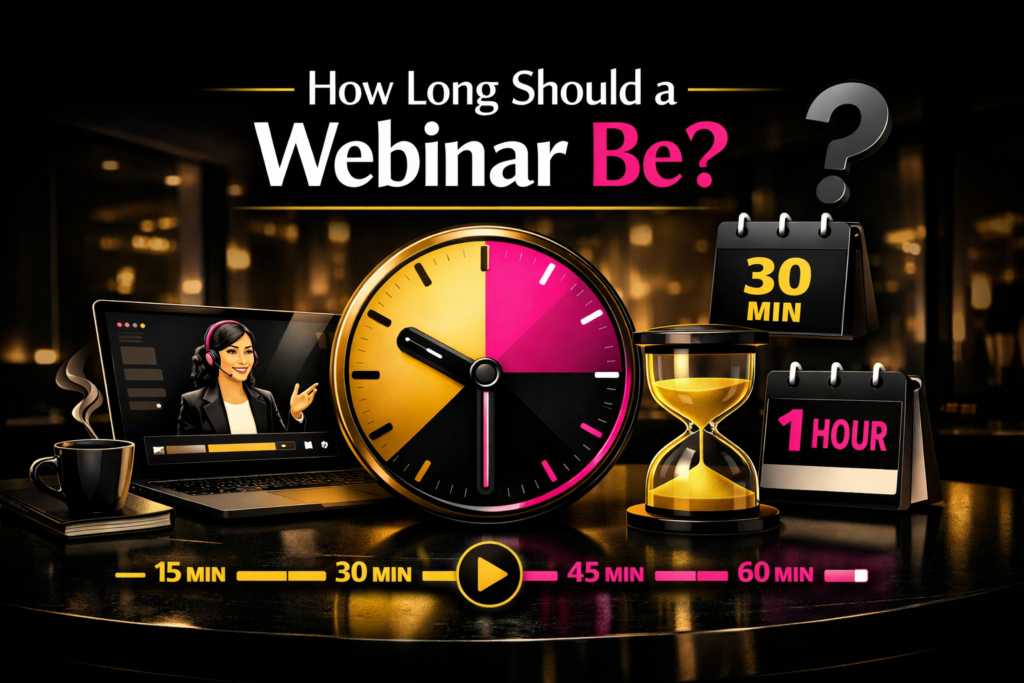
A B2B executive webinar performs best when it’s concise, high‑value, and designed around the way senior leaders consume insight. Discover why the ideal length is 30–45 minutes — and how the right structure can maximise attendance, engagement, and conversion.
How to Host an Executive Dinner for Senior Leaders: A Practical Guide
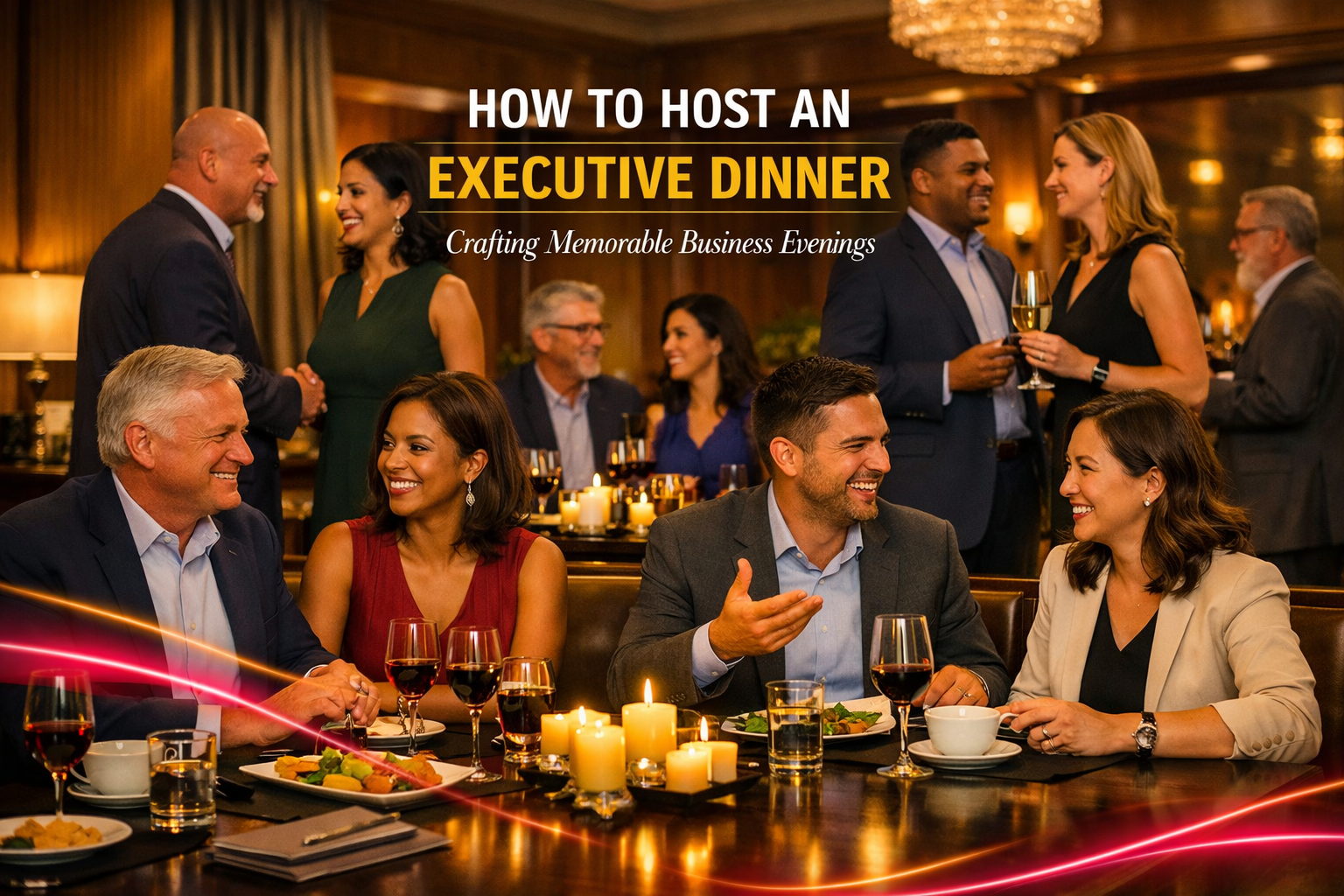
Steps That Turn a Standard Dinner Into a Premium Leadership Experience Hosting an executive dinner is one of the most effective ways to engage senior decision‑makers, but only when it’s done with intention, structure, and a clear understanding of what senior leaders value. Unlike traditional corporate events, these dinners are not about scale, spectacle, or performance. They are about relevance, alignment, and creating an environment where meaningful conversation can unfold naturally. If you’re exploring how to host an executive dinner for senior leaders, this guide breaks down the essential elements that separate high‑value dinners from forgettable ones. Start With Purpose: Why This Dinner Matters How Clear Intent Shapes the Entire Senior‑Leader Experience Before you think about venues, menus, or guest lists, you need absolute clarity on the purpose of the dinner. Senior leaders do not attend events for generic networking or surface‑level conversation. They attend when the topic speaks directly to their responsibilities, pressures, and strategic priorities. Begin by defining the core outcome: What should participants leave knowing, understanding, or considering? What challenge or opportunity does this dinner help them explore? How does it support your broader engagement strategy? This purpose becomes the anchor for every decision that follows, from who you invite to how you structure the conversation. A strong executive dinner is not a social gathering; it is a curated environment designed to create value for the people in the room. When the purpose is clear, the dinner feels intentional, relevant, and worthy of senior‑level attention. When it isn’t, the evening risks becoming another unfocused corporate meal that delivers little impact. Every great executive dinner starts with purpose. When you’re clear on why the dinner matters, everything else, the guest list, the conversation, the outcomes, falls into place. Purpose isn’t a detail. It’s the strategy. Convene X Team Tweet Curate the Right Guests: Quality Over Quantity The Power of a Carefully Curated, Peer‑Aligned Guest List One of the most important steps in how to host an executive dinner for senior leaders is curating the right group of attendees. The power of these dinners comes from the alignment of the people in the room. Senior leaders engage best when they are surrounded by peers who share similar levels of responsibility, face comparable challenges, and understand the context of the discussion. The ideal group size is typically 8, 12 participants. This allows for balanced contribution, natural flow, and genuine peer‑level exchange. Avoid the temptation to overfill the table, more people rarely equals more value. Instead, focus on creating a room where every attendee feels they belong and can contribute meaningfully. Equally important is the selection process. Invitations should be discreet, personalised, and purposeful. Senior leaders appreciate being chosen for their perspective, not targeted for their budget. When the guest list is curated with care, the dinner becomes a space where trust builds quickly and conversation flows naturally. Design the Conversation: Structure Without Performance The Art of Guiding Dialogue Without Turning It Into a Presentation A successful executive dinner is not a free‑flowing chat, nor is it a formal presentation. It sits in the middle, structured enough to stay focused, but relaxed enough to feel natural. The best dinners follow a simple rhythm: Arrival & informal welcome Opening context from the host A guided conversation anchored around 2, 3 themes A natural close with clear next steps The conversation should feel composed, calm, and senior‑appropriate. Avoid anything that feels like a pitch, performance, or panel discussion. Senior leaders value authenticity and relevance, not theatrics. A strong moderator or host is essential. Their role is to guide the flow, balance contributions, and ensure the discussion stays aligned with the purpose. They should be present but not dominant, shaping the conversation without overshadowing it. When done well, the structure becomes invisible, allowing the group to focus on meaningful dialogue rather than the mechanics of the evening. Create an Environment That Supports Trust How Thoughtful Design Creates a Space Where Leaders Open Up The environment of an executive dinner is as important as the content. Senior leaders respond best to settings that feel calm, private, and intentionally designed. Choose a venue that supports conversation, not one that overwhelms it. Lighting should be soft, noise levels low, and the table layout conducive to eye contact and natural flow. Small details matter: discreet service, thoughtful pacing, and a menu that doesn’t interrupt the conversation. The goal is to remove friction so participants can focus entirely on the discussion. Trust is built not only through what is said, but through how the environment makes people feel. Finally, close the evening with clarity. Thank participants, reinforce the value of their contribution, and outline what happens next, whether that’s a follow‑up summary, a future dinner, or a private conversation. A strong close signals professionalism and ensures the private executive dinner leaves a lasting impression. Executive Dinners Are Now a Core Part of Senior‑Leader Strategy Why This Format Will Continue to Shape High‑Value Engagement in 2026 and Beyond Executive dinners have moved far beyond hospitality, they have become a strategic channel for brands that want to build meaningful relationships with senior decision‑makers. As leaders continue to prioritise relevance, depth, and curated environments, the brands that invest in intimate, insight‑driven experiences will consistently outperform those relying on traditional event models. The shift is structural, not temporary: senior leaders are choosing fewer engagements, but they are choosing them more carefully. This is why the executive dinner format is becoming a long‑term pillar of senior‑level engagement. It creates the conditions for trust, candour, and strategic alignment, outcomes that are increasingly difficult to achieve through digital channels or large‑scale events. Brands that understand this shift and design dinners with intention will build stronger relationships, accelerate commercial conversations, and position themselves as true partners rather than vendors. In 2026 and beyond, this format isn’t just effective, it’s essential. Explore Continue with Convene X Invitation-only executive dinners, virtual roundtables and webinars for senior leaders in the UK and US. Explore the formats, or tell us the room you want to be in. Private executive dinners London dinner venues Dinners for CFOs
What is the Best Webinar Format for Executive Audiences?
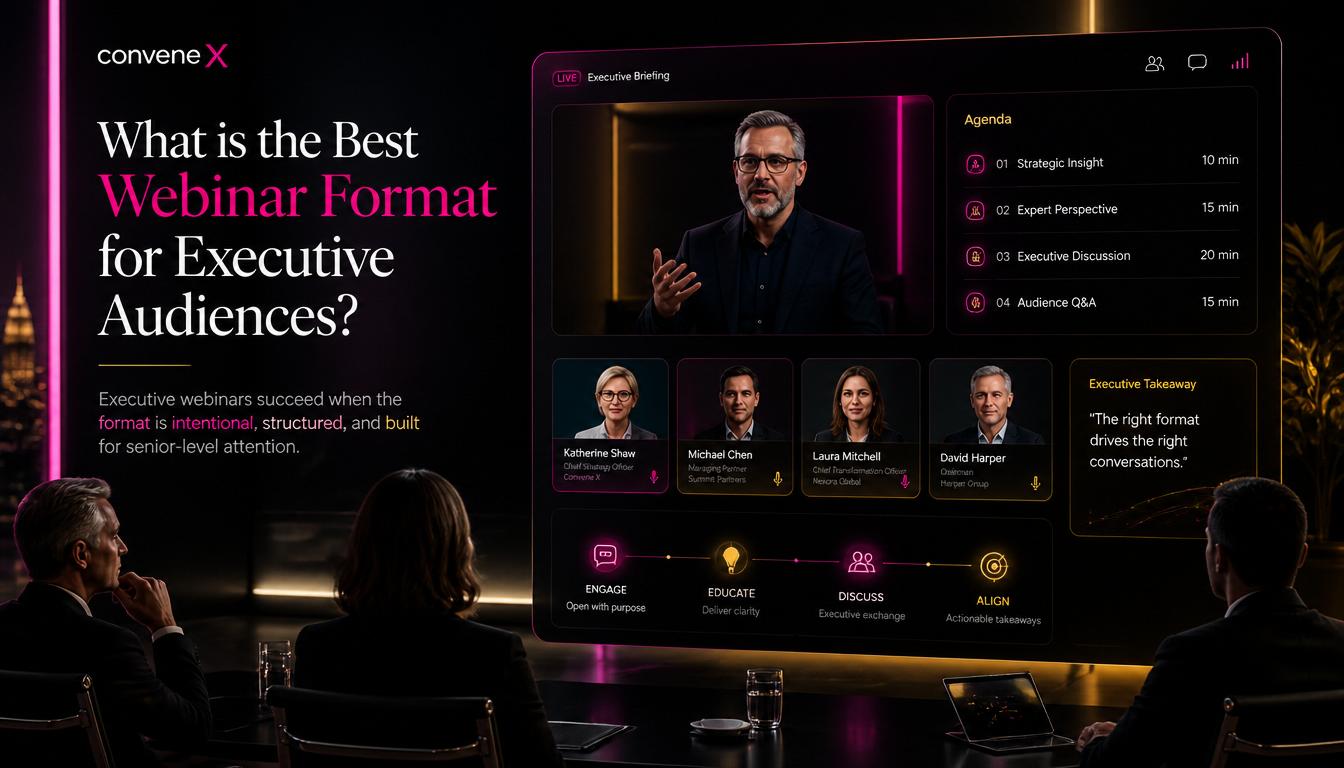
Not all webinar formats are equal. This guide breaks down the best structures for executive audiences — helping you choose the format that drives real engagement at senior level.
Why Invitation-Only Events Create Better Executive Conversations
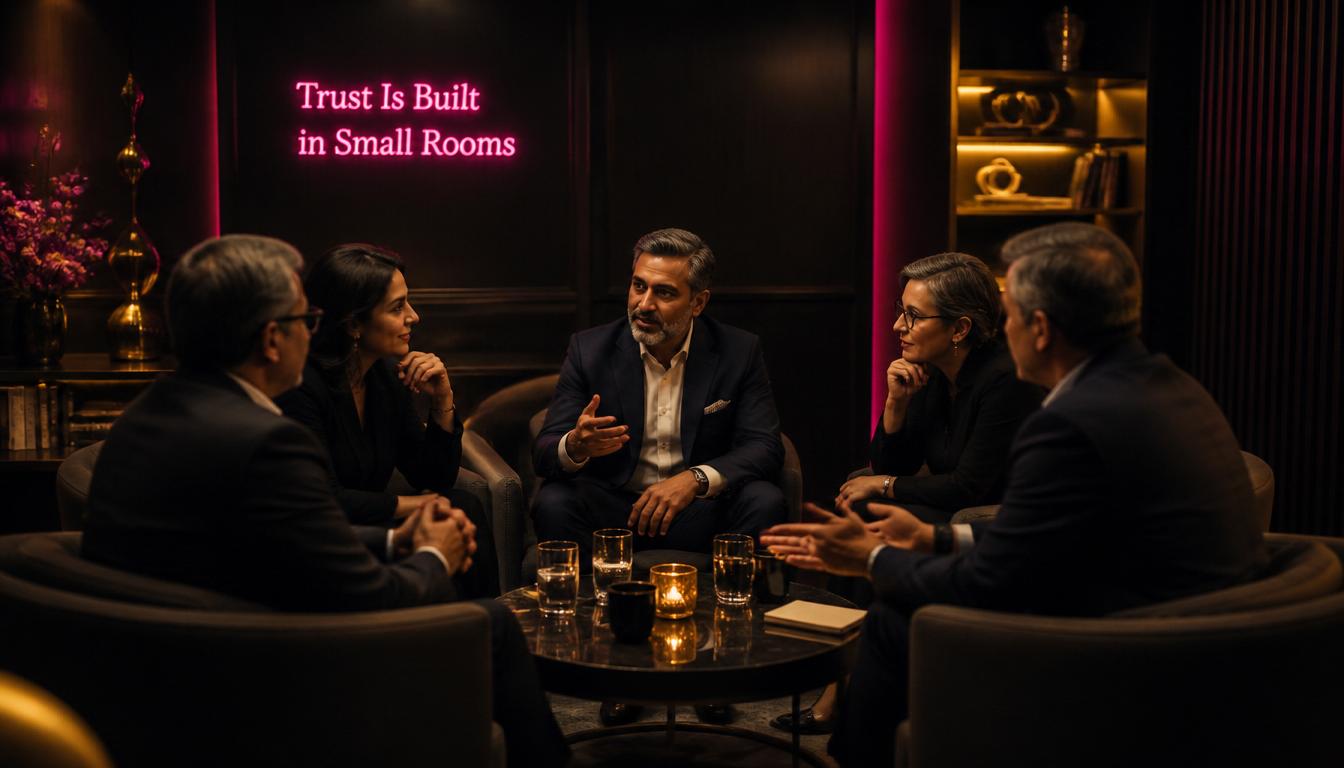
At senior levels, attention is a finite resource. Leaders are invited to countless events, forums, and discussions, yet many decline not because the topic lacks merit