
Most B2B events follow the same script. A hotel ballroom. A keynote. A row of vendor logos on a backdrop. Lunch served to 400 people who never once spoke to a decision-maker worth speaking to.
An executive dinner is none of that.
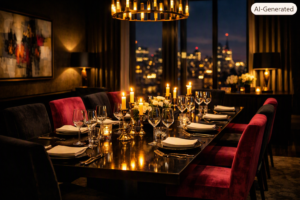
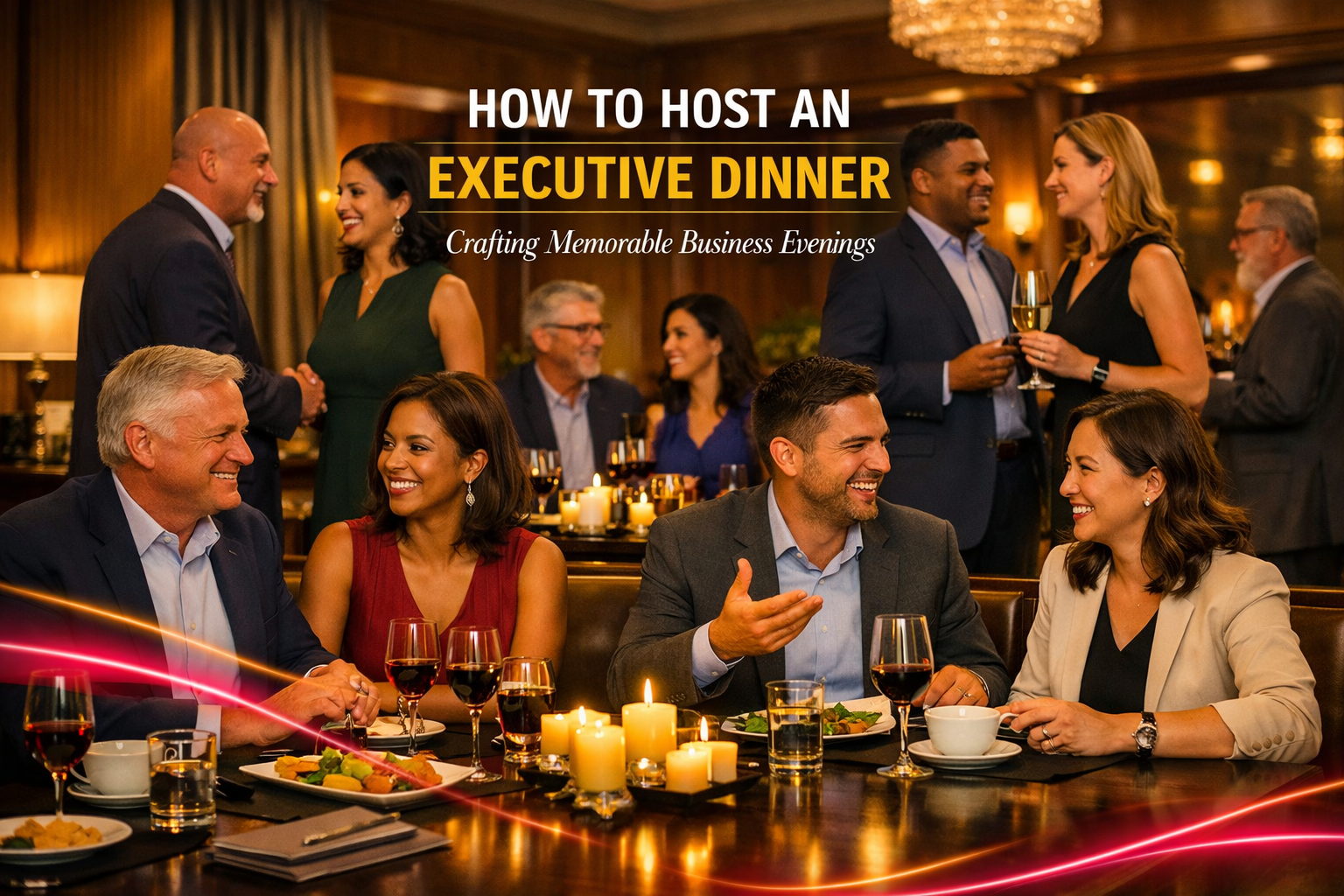
The term gets used loosely — sometimes it just means “business dinner.” But in the context of B2B pipeline building, an executive dinner is a specific, deliberately engineered format. Small guest list, curated for seniority and relevance. Private dining room, not a hotel suite. No pitch from the stage. No lanyards. Conversation facilitated, not forced.
The format exists because the problem it solves is real: getting 10-15 CIOs, CMOs, or VP-level buyers in the same room, off the record, in a setting where they actually talk — is, for most companies, nearly impossible through conventional means. Cold outreach conversion rates to senior leaders are at historic lows. Conference booths yield badge scans, not relationships. Executive dinners offer a different mechanism entirely.
What makes one work
The guest list is everything. The best executive dinners run on curation — not just seniority, but relevance between guests. A room full of CTOs who don’t share any common problems produces small talk. A room of CTOs all navigating the same infrastructure transition produces a conversation that runs two hours past scheduled end time.
The second variable is facilitation. A poorly facilitated dinner devolves into one person dominating while eight others check their phones. A well-run one uses structured opening questions, seating designed to split natural alliances, and a host who knows when to step in and when to stay quiet.
Third: the host’s role. If the sponsoring company treats the dinner as a product demo by other means, attendees feel it. If they treat it as genuine peer gathering — with their own senior person in the room as a participant, not a presenter — trust accumulates that no amount of follow-up email can manufacture.
What an executive dinner is not
It’s not a networking event. There’s no mingling portion, no speed-networking round, no scheduled one-on-one slots. It’s also not a roundtable — that’s a different format with a different structure (more structured, usually more agenda-driven, sometimes includes external speakers). It’s not a private dining experience in the restaurant-review sense. The venue matters, but it’s in service of the conversation, not the centrepiece.
The ROI case
Across their careers, our team has delivered over 127 events of this kind across B2B SaaS, cybersecurity, fintech, and enterprise tech. The consistent finding: the cost-per-relationship of a curated dinner with a 12-person senior guest list beats the cost-per-lead of an equivalent conference sponsorship by a meaningful margin — not because the ticket price is lower, but because the quality of conversation is categorically different.
One-to-one follow-up after a dinner rarely needs to explain what the company does. The dinner already did that, without a slide ever being shown.
Is it right for every company?
No. The format works when the target audience genuinely values peer conversation, when the host has something real to contribute to that conversation, and when the sales motion is long enough that a relationship matters. If you’re closing in two weeks, a dinner is too slow. If you need 200 leads, a dinner is too small. If you’re trying to build trust with 12 people who control multi-million pound budgets and who your SDRs cannot reach by phone — it’s probably the most efficient thing you can do.