
What Is an Executive Conference? A Guide for Senior B2B Leaders
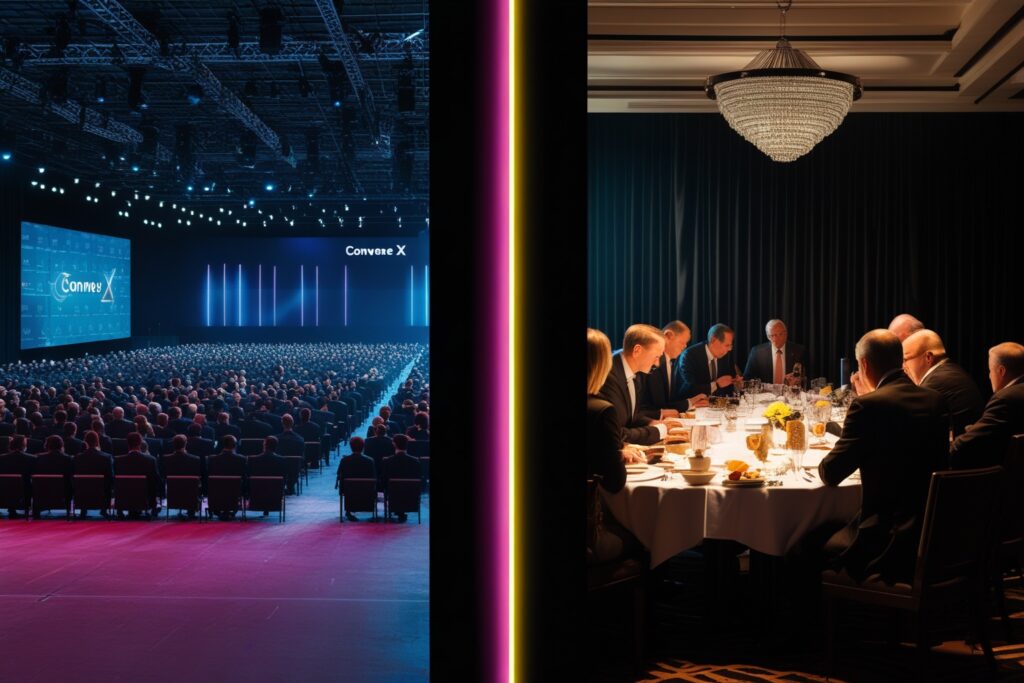
What Is an Executive Conference:A Guide for Senior B2B Leaders Where Insight, Influence, and Executive Alignment Converge Executive Conference Guide for Senior B2B Leaders The Core Purpose of an Executive Conference Private Executive Dinners Searching for “executive conference” usually means one of two things: you’re evaluating whether to attend one, or you’re weighing up how to bring senior leaders together for your own organisation. Either way, it’s worth understanding what an executive conference actually is, where it delivers real value, where its format starts to work against the very people it’s meant to serve, and what genuine alternatives exist. What Is an Executive Conference? An executive conference is a large-scale, structured event bringing together senior leaders typically C-suite, VP, or director-level around a shared industry theme. Expect keynote speakers, panel discussions, breakout sessions, and a trade-show-style exhibition floor. Attendance can range from a few hundred to several thousand people, run across one to three days, and usually carries a significant ticket price alongside sponsor and exhibitor revenue that funds the production. The format is built for reach: broad industry visibility, brand exposure, and exposure to a wide cross-section of the market. That scale is exactly what makes it useful for some objectives, and exactly what limits it for others. Where the Format Came From The modern executive conference grew out of the trade show and industry association model of the mid-20th century gatherings built to disseminate information broadly before digital channels existed to do it faster. Decades later, the format has largely stayed the same even as the problem it originally solved has largely disappeared. Information now spreads instantly online; what’s scarce today isn’t access to content, it’s access to genuine, unhurried conversation with the right people. That shift is a big part of why smaller curated formats have grown so quickly in the B2B events space over the past several years. Where the Traditional Conference Format Falls Short Ask any senior leader who has sat through a packed conference agenda what actually stayed with them, and the answer is rarely a keynote. It’s usually a single hallway conversation, or a dinner they were invited to on the side. That’s not a coincidence it points to a structural limitation in the format itself. Depth gets sacrificed for scale. With hundreds of attendees, meaningful one-to-one conversation is the exception, not the design. Sales agendas dominate. Sponsored sessions and exhibition floors mean much of the “content” is a pitch in disguise. Packed schedules leave no room to think. Back-to-back sessions rarely leave space for the kind of unhurried conversation senior decision-makers actually value. Networking is broad, not relevant. You’re as likely to meet someone with nothing in common professionally as you are a genuine peer. None of this makes conferences a bad idea it makes them a specific tool, suited to specific goals: broad market visibility, staying current on industry direction, and casting a wide net. When the goal is different genuine peer dialogue, candid discussion, or building a small number of high-value relationships, a different format tends to serve better. The Real Cost of an Executive Conference The ticket price is only part of the equation. Factor in travel, accommodation, and often overlooked two to three days of a senior leader’s time away from their actual role. For a single attendee, that fully-loaded cost frequently runs into several thousand pounds once time is valued properly. The return on that investment depends entirely on what actually happens while they’re there: how many genuine conversations took place, versus how many sessions were sat through passively. This is the calculation worth doing before committing a senior leader’s calendar to a three-day conference: what specifically are you optimising for, and is a conference actually the most efficient way to get it? The Alternative: Curated Executive Formats This is where smaller, invitation-only formats private executive dinners and virtual roundtables earn their place. Instead of hundreds of attendees and a packed agenda, these formats bring together 8-15 genuine peers around a single, focused conversation. No stage, no sales pitch, no scramble for attention. The trade-off is scale for depth. You won’t reach a thousand people in an afternoon, but the handful of conversations you do have are the kind that actually move a relationship, a deal, or a decision forward. Format Executive Conference Executive Roundtable Executive Dinner Typical Size 200-2000+ 8-15 6-12 Best For Broad industry visibility, brand exposure Focused peer dialogue on a challenge Relationship-building and conversation Trade-off Limited depth, sales-heavy agenda Smaller reach, requires careful curation Highest intimacy, lowest volume How to Choose the Right Format The right choice comes down to your actual objective, not habit or convention: If the goal is market visibility or brand awareness, a conference still does that job well. If the goal is building a handful of genuinely valuable senior relationships, a curated dinner or roundtable will consistently outperform a conference floor. If your team has budget to do both, many organisations use conferences for reach and pair them with a smaller private dinner for the relationships that actually matter. If You Do Attend a Conference: Getting More From It Conferences aren’t going away, and for the right objective they remain genuinely useful. A few practical habits make a meaningful difference to what you actually get out of one: Set a specific target before you arrive, a handful of named people or organisations you want a real conversation with, not a general intention to “network”. Prioritise the gaps over the sessions, the coffee breaks and meal times are usually where the valuable conversations actually happen. Follow up within 48 hours, the relevance of a conference conversation decays quickly once everyone’s back at their desks. Frequently Asked Questions What’s the difference between an executive conference and an executive summit? The terms are often used interchangeably. In practice, “summit” sometimes implies a slightly smaller, more curated audience than a full-scale conference, but both typically involve dozens to hundreds of attendees and a multi-session agenda. How many people attend a