
What Is an Executive Conference? A Guide for Senior B2B Leaders
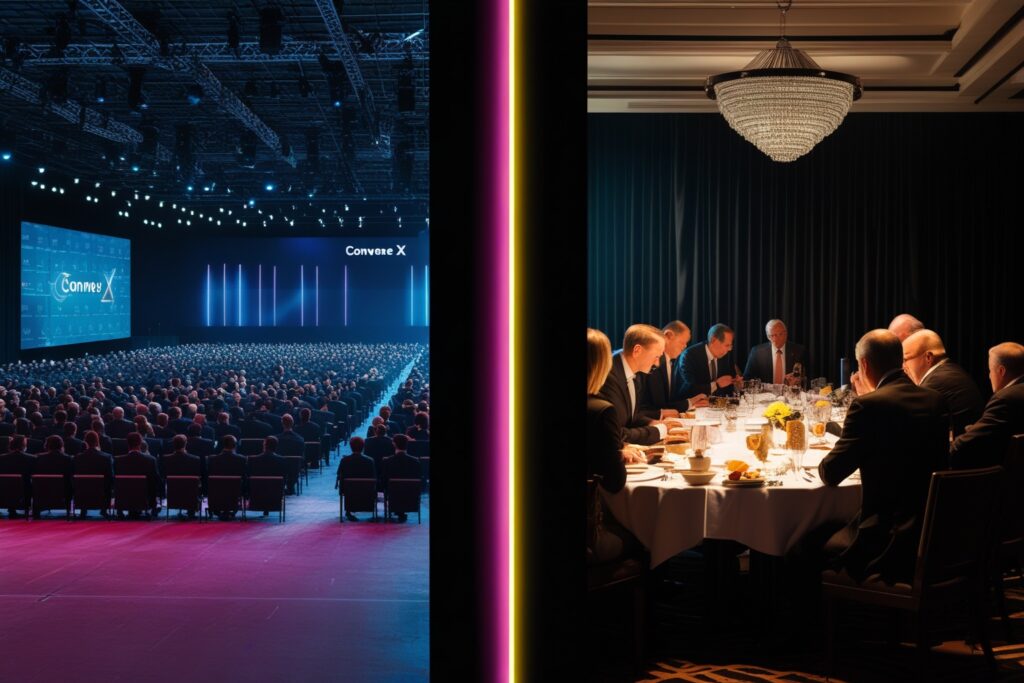
What Is an Executive Conference:A Guide for Senior B2B Leaders Where Insight, Influence, and Executive Alignment Converge Executive Conference Guide for Senior B2B Leaders The Core Purpose of an Executive Conference Private Executive Dinners Searching for “executive conference” usually means one of two things: you’re evaluating whether to attend one, or you’re weighing up how to bring senior leaders together for your own organisation. Either way, it’s worth understanding what an executive conference actually is, where it delivers real value, where its format starts to work against the very people it’s meant to serve, and what genuine alternatives exist. What Is an Executive Conference? An executive conference is a large-scale, structured event bringing together senior leaders (typically C-suite, VP or director level) around a shared industry theme. Expect keynote speakers, panel discussions, breakout sessions, and a trade-show-style exhibition floor. Attendance can range from a few hundred to several thousand people, run across one to three days, and usually carries a significant ticket price alongside sponsor and exhibitor revenue that funds the production. The format is built for reach: broad industry visibility, brand exposure, and exposure to a wide cross-section of the market. That scale is exactly what makes it useful for some objectives, and exactly what limits it for others. Where the Format Came From The modern executive conference grew out of the trade show and industry association model of the mid-20th century: gatherings built to disseminate information broadly before digital channels existed to do it faster. Decades later, the format has largely stayed the same even as the problem it originally solved has largely disappeared. Information now spreads instantly online; what’s scarce today isn’t access to content, it’s access to genuine, unhurried conversation with the right people. That shift is a big part of why smaller curated formats have grown so quickly in the B2B events space over the past several years. Where the Traditional Conference Format Falls Short Ask any senior leader who has sat through a packed conference agenda what actually stayed with them, and the answer is rarely a keynote. It’s usually a single hallway conversation, or a dinner they were invited to on the side. That’s not a coincidence. It points to a structural limitation in the format itself. Depth gets sacrificed for scale. With hundreds of attendees, meaningful one-to-one conversation is the exception, not the design. Sales agendas dominate. Sponsored sessions and exhibition floors mean much of the “content” is a pitch in disguise. Packed schedules leave no room to think. Back-to-back sessions rarely leave space for the kind of unhurried conversation senior decision-makers actually value. Networking is broad, not relevant. You’re as likely to meet someone with nothing in common professionally as you are a genuine peer. None of this makes conferences a bad idea. It makes them a specific tool, suited to specific goals: broad market visibility, staying current on industry direction, and casting a wide net. When the goal is different genuine peer dialogue, candid discussion, or building a small number of high-value relationships, a different format tends to serve better. The Real Cost of an Executive Conference The ticket price is only part of the equation. Factor in travel, accommodation, and often overlooked two to three days of a senior leader’s time away from their actual role. For a single attendee, that fully-loaded cost frequently runs into several thousand pounds once time is valued properly. The return on that investment depends entirely on what actually happens while they’re there: how many genuine conversations took place, versus how many sessions were sat through passively. This is the calculation worth doing before committing a senior leader’s calendar to a three-day conference: what specifically are you optimising for, and is a conference actually the most efficient way to get it? The Alternative: Curated Executive Formats This is where smaller, invitation-only formats, such as private executive dinners and virtual roundtables, earn their place. Instead of hundreds of attendees and a packed agenda, these formats bring together 8-15 genuine peers around a single, focused conversation. No stage, no sales pitch, no scramble for attention. The trade-off is scale for depth. You won’t reach a thousand people in an afternoon, but the handful of conversations you do have are the kind that actually move a relationship, a deal, or a decision forward. Format Executive Conference Executive Roundtable Executive Dinner Typical Size 200-2000+ 8-15 6-12 Best For Broad industry visibility, brand exposure Focused peer dialogue on a challenge Relationship-building and conversation Trade-off Limited depth, sales-heavy agenda Smaller reach, requires careful curation Highest intimacy, lowest volume How to Choose the Right Format The right choice comes down to your actual objective, not habit or convention: If the goal is market visibility or brand awareness, a conference still does that job well. If the goal is building a handful of genuinely valuable senior relationships, a curated dinner or roundtable will consistently outperform a conference floor. If your team has budget to do both, many organisations use conferences for reach and pair them with a smaller private dinner for the relationships that actually matter. If You Do Attend a Conference: Getting More From It Conferences aren’t going away, and for the right objective they remain genuinely useful. A few practical habits make a meaningful difference to what you actually get out of one: Set a specific target before you arrive, a handful of named people or organisations you want a real conversation with, not a general intention to “network”. Prioritise the gaps over the sessions, the coffee breaks and meal times are usually where the valuable conversations actually happen. Follow up within 48 hours, the relevance of a conference conversation decays quickly once everyone’s back at their desks. Frequently Asked Questions What’s the difference between an executive conference and an executive summit? The terms are often used interchangeably. In practice, “summit” sometimes implies a slightly smaller, more curated audience than a full-scale conference, but both typically involve dozens to hundreds of attendees and a multi-session agenda. How many
How to Host a Virtual Roundtable in 2026: Complete B2B Guide
Explore how modern executive meeting solutions move beyond PowerPoint to create high-trust, invite-only environments that connect C-suite decision-makers.
Best Private Dining Rooms in Mayfair: The Top Private & Luxury Spaces for Executive Dining

Explore how modern executive meeting solutions move beyond PowerPoint to create high-trust, invite-only environments that connect C-suite decision-makers.
Beyond the Boardroom: 3 Modern Executive Meeting Solutions for High-Impact B2B Engagement

Explore how modern executive meeting solutions move beyond PowerPoint to create high-trust, invite-only environments that connect C-suite decision-makers.
What Makes Executive Dinners Different?
Executive dinners are often grouped alongside general networking events, yet the two formats serve fundamentally different purposes.
What Is an Executive Dinner? The Complete 2026 Guide for Senior‑Level Engagement
Why Executive Dinners Matter in 2026 Executive dinners have become one of the most effective ways to engage senior decision‑makers in 2026. In a world where attention is fragmented and digital fatigue is high, leaders increasingly value intimate, curated environments where conversations feel natural, relevant, and genuinely useful. An executive dinner is not a networking event, not a sales meeting, and not a presentation. It is a private, invitation‑only gathering designed to bring a select group of senior leaders together for meaningful dialogue, shared insight, and high‑value relationship building. For brands, this format offers something rare: uninterrupted access to decision‑makers in a setting where trust forms quickly and conversations move beyond surface‑level challenges. For attendees, it provides a chance to connect with peers, exchange perspectives, and explore ideas without the pressure of a formal agenda. Executive Dinner Definition What Makes an Executive Dinner Different From a Standard Business Meal An executive dinner is a curated, small‑group dining experience designed to facilitate strategic conversation among senior‑level leaders. Unlike traditional networking events or sales‑driven meetings, the purpose of an executive dinner is not to pitch, present, or persuade. Instead, it creates a space where decision‑makers can explore challenges, share insights, and build meaningful relationships in an environment that feels natural, respectful, and genuinely valuable. These dinners are intentionally intimate. Every element, from the guest list to the seating plan to the flow of conversation, is crafted to encourage openness and depth. When senior leaders step into a room where the noise has been removed and the experience has been thoughtfully designed, the quality of dialogue changes. Conversations become more strategic, more candid, and more aligned with the realities leaders are navigating inside their organisations. For brands, executive dinners offer something rare: uninterrupted access to senior decision‑makers in a setting where trust forms quickly. For attendees, they provide a chance to connect with peers, exchange perspectives, and explore ideas without the pressure of a formal agenda or the distractions of a large‑scale event. While business meals are common, an executive dinner is fundamentally different. It is purpose‑built, not incidental. The guest list is curated, the topic is intentional, and the environment is designed to support meaningful dialogue. Nothing is left to chance. The result is a structured yet relaxed experience where leaders feel comfortable sharing real challenges and exploring new thinking. The Core Purpose of an Executive Dinner Creating Space for High‑Value Strategic Dialogue The primary goal of an executive dinner is to enable high‑value, strategic conversation. Everything about the format (the guest list, the venue, the topic, the seating, the pacing, even the style of hosting) is intentionally designed to create an environment where dialogue feels natural, relevant, and genuinely useful to senior leaders. Unlike traditional events, where noise, volume, and competing priorities dilute the quality of interaction, an executive dinner removes friction. It gives leaders the rare opportunity to slow down, think clearly, and engage in conversations that matter. When the right people are in the room and the experience is curated with intention, the discussion naturally shifts from surface‑level updates to deeper insight sharing, real‑world challenges, and forward‑looking ideas. For brands, the value is equally significant. Executive dinners create a setting where trust forms quickly and authentically, not through presentations or pitches, but through meaningful human connection. They allow organisations to understand what senior leaders are truly prioritising, how they are navigating change, and where future opportunities may emerge. Brands use executive dinners to: Build trust with senior leaders Understand real‑world challenges and priorities Position themselves as credible, thoughtful partners Create opportunities for future commercial conversations Strengthen relationships with existing clients When executed well, an executive dinner becomes more than a meal. It becomes a catalyst for long‑term relationships, strategic alignment, and commercial momentum. Who Attends and Why It Matters The Senior Leaders Who Shape the Conversation Executive dinners typically bring together a carefully selected group of senior leaders whose perspectives genuinely elevate the conversation. The guest list is intentionally small, ensuring every voice at the table contributes meaningfully to the dialogue. Most dinners include: C‑suite leaders Individuals responsible for shaping organisational strategy and long‑term direction. VPs, Directors, and Heads of Function Senior operators who understand the realities of execution and the challenges of transformation. Senior decision‑makers in targeted industries Leaders with shared priorities, similar pressures, and overlapping areas of responsibility. A small number of hosts or subject‑matter experts Present not to dominate the conversation, but to guide it, enrich it, and ensure it remains relevant. The power of the format comes from curation. When the right people are in the room, aligned in seniority, relevance, and experience, the conversation becomes richer, more strategic, and more valuable for everyone involved. Leaders feel comfortable speaking openly, exploring challenges, and sharing perspectives they may not voice in larger or more formal settings. This alignment is what transforms an executive dinner from a simple meal into a high‑value strategic experience. The quality of insight increases, the depth of discussion improves, and the relationships formed carry far greater weight. In short: who attends determines the impact of the entire evening. The most valuable executive dinners begin with intention. Purpose sets the tone, guides the dialogue, and defines the impact. Convene X Team Why Executive Dinners Work for Senior‑Level Engagement The Power of Intimate, High‑Trust Environments Executive dinners outperform other event formats because they align with how senior leaders genuinely prefer to engage: privately, intentionally, and without noise. Senior decision‑makers operate in environments filled with pressure, complexity, and constant demands on their attention. Large events, webinars, and traditional networking sessions often add to that noise rather than reduce it. An executive dinner does the opposite: it creates a calm, focused space where leaders can think clearly, speak openly, and connect meaningfully. The intimacy of the format removes the performative layer that often exists in bigger settings. There is no stage, no audience, and no expectation to deliver polished soundbites. Instead, leaders are invited into a setting where conversation flows naturally and where the
Why Invitation-Only Events Create Better Executive Conversations
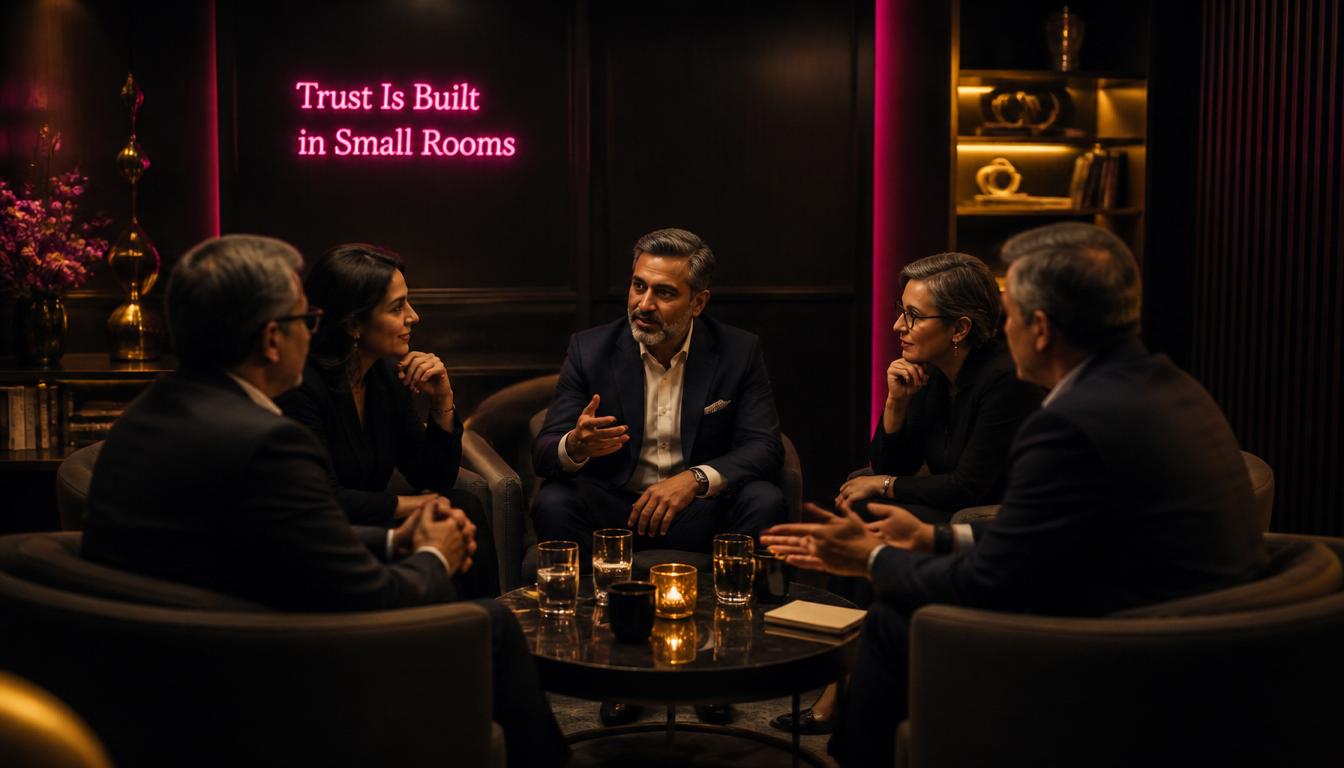
At senior levels, attention is a finite resource. Leaders are invited to countless events, forums, and discussions, yet many decline not because the topic lacks merit
Why Senior Leaders Value Conversation Over Presentation
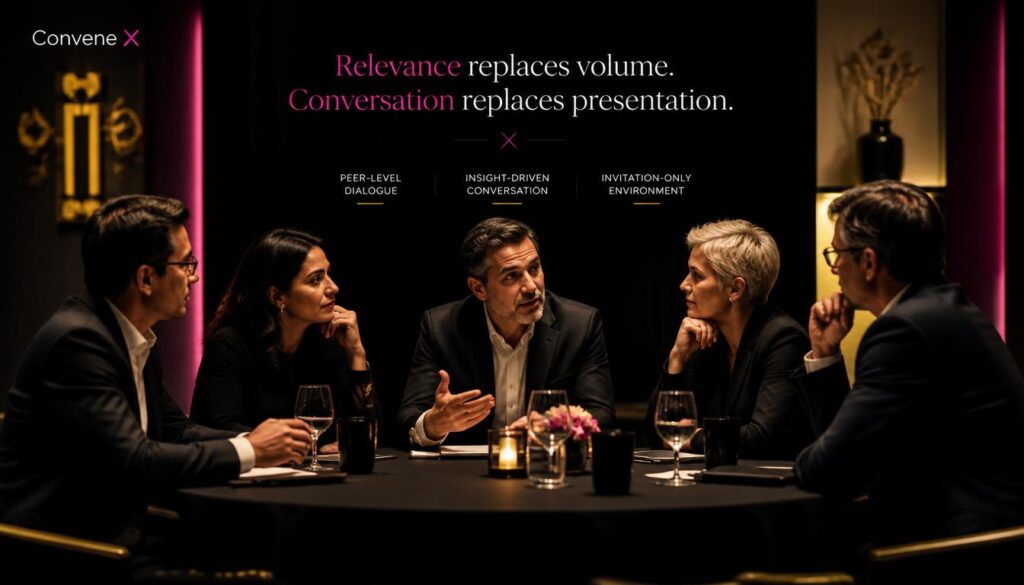
Senior leaders don’t want to be presented to. They want to be engaged. Discover why conversation‑led formats create deeper insight, stronger trust, and more meaningful executive dialogue than traditional presentations ever can.
Executive Webinars vs Virtual Roundtables

Executive webinars and virtual roundtables both play a powerful role in senior‑level engagement, but they deliver value in very different ways. Webinars provide structured, high‑signal insight at scale, while roundtables create intimate, peer‑driven conversations that uncover deeper challenges and opportunities. When used together, they form a strategic sequence that moves leaders from awareness to meaningful dialogue, and ultimately, to commercial opportunity.